Replay and backtesting: identify the exercise
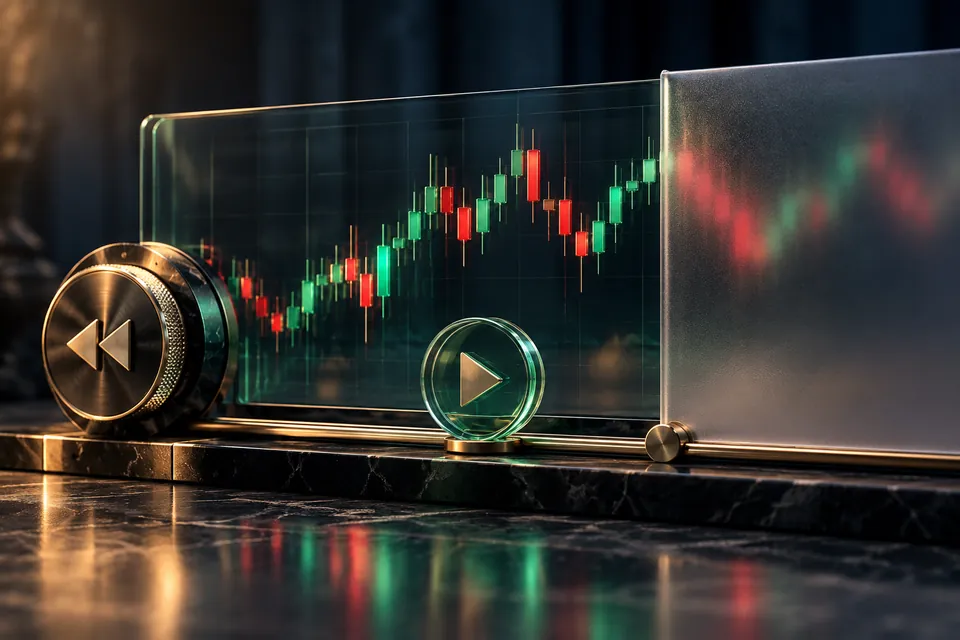
Replay displays history in sequence, often candle by candle. It can train observation, zone drawing and adherence to a plan. Backtesting is a broader evaluation of defined rules on a specified sample and may be manual or automated.
Scrolling freely to find attractive examples is not yet a reliable test. Write down the question, the chosen history and the events that count as entries and exits. Otherwise it is hard to distinguish improved skill from simply selecting convenient cases after the chart’s outcome is known.
Choose dates, rules and execution assumptions
Select the market, timeframe and dates. Set demo capital, the risk budget and how SL and TP are resolved. Record whether spread, commission and slippage are included. When they are omitted, interpret the result as a simplified gross outcome.
Check candle provenance, the time zone and any data gaps. XAUUSD gold, EUR/USD and cryptocurrency need not share sessions or contract specifications. Before comparing results, ensure that different contract units or account currencies are not being treated as identical inputs.
Related guide: Candlestick trading: doji, hammers and market context
How to practise forex replay without looking ahead
Pause at a decision point, describe the condition and mark the plan. Reveal the next candles afterwards. A Long/Short drawing is not an open trade: an analysis plan and a confirmed demonstration order are separate actions.
Rewinding can help review a mistake, but label the improved attempt as another trial. Do not substitute it for the initial test result. Looking at later candles, choosing dates around a known move and changing rules after a loss are different ways of bringing future information into an earlier decision.
Separate learning from evaluation
Use one part of history to refine definitions and another to evaluate the same rules without further adjustments. Keep chronological order and identify data you have already inspected. No single trade count automatically establishes every strategy’s reliability.
Use a fresh historical segment to evaluate written rules
Compare trends, ranges and more volatile periods. Record sample size, average results, costs and losing sequences. A large gain in a few selected examples does not describe the whole outcome distribution. Testing many variations also makes it easier to find an attractive result by chance.
A Market Trainer exercise
Select a date range and choose “Load chart”. Set forward or backward candle counts and playback speed. Draw levels, zones and a Long/Short plan; separately confirm a demo position to observe its result. Record the rule that permits a protection change before moving a stop.
This trainer displays gross results without spread, commission or slippage. When one candle contains both SL and TP, the intrabar sequence may be unknown; the tool uses a conservative stop-loss outcome. Note these limitations alongside the result and choose one behaviour to practise in the next session.
Related guide: Forex trading journal: what to record and how to review
Questions and answers
Does a good backtest guarantee profits?
No. Historical conditions, rule fitting, costs and future markets can differ from the test. The result is evidence for further evaluation.
Is rewinding a chart always wrong?
No, it is useful for learning and review. In a formal test, keep a corrected attempt separate from the original decision so future information does not rewrite the result.
How do I choose dates for a forex replay practice session?
Choose the period before starting and record the instrument, timeframe and rules. Reveal later candles only after making the decision. Do not select only dates known for attractive completed moves. Keep the segment used to learn rules separate from a later evaluation segment, and document skipped situations as well as trades.
Practise in the app
App tools may require sign-in. Articles can be read without an account.Sources and further reading
This guide contains original educational examples, not current trading recommendations. The links below provide further reading and do not imply a partnership with their publishers.
Sources checked: 17 October 2026